Choosing a white-label vs custom gambling app is primarily a decision about control: who can modify the software, connect other services, inspect security evidence and keep the product operating when a supplier relationship ends. Launch timing matters, but an attractive delivery schedule does not compensate for missing licenses, unclear data rights or an impractical exit.
Short answer: white-label software can reduce the amount of product infrastructure an operator must build, while custom development can give the buyer more control over product-specific code and change priorities. Neither label guarantees ownership, regulatory permission, portability or security. Those outcomes depend on the actual contract, technical boundaries and operating arrangements.
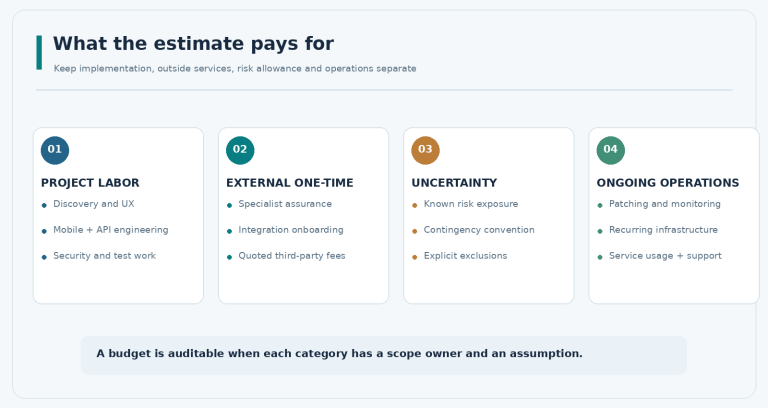
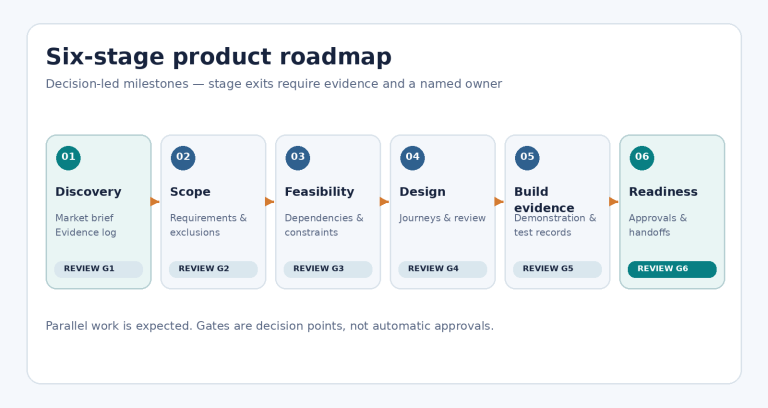
This guide compares software sourcing models for organizations evaluating a regulated real-money mobile product. It does not quote development prices, rank agencies or compare native applications with progressive web apps. For scope and delivery milestones, start with the mobile gambling product roadmap; estimate implementation effort separately in the development cost worksheet.
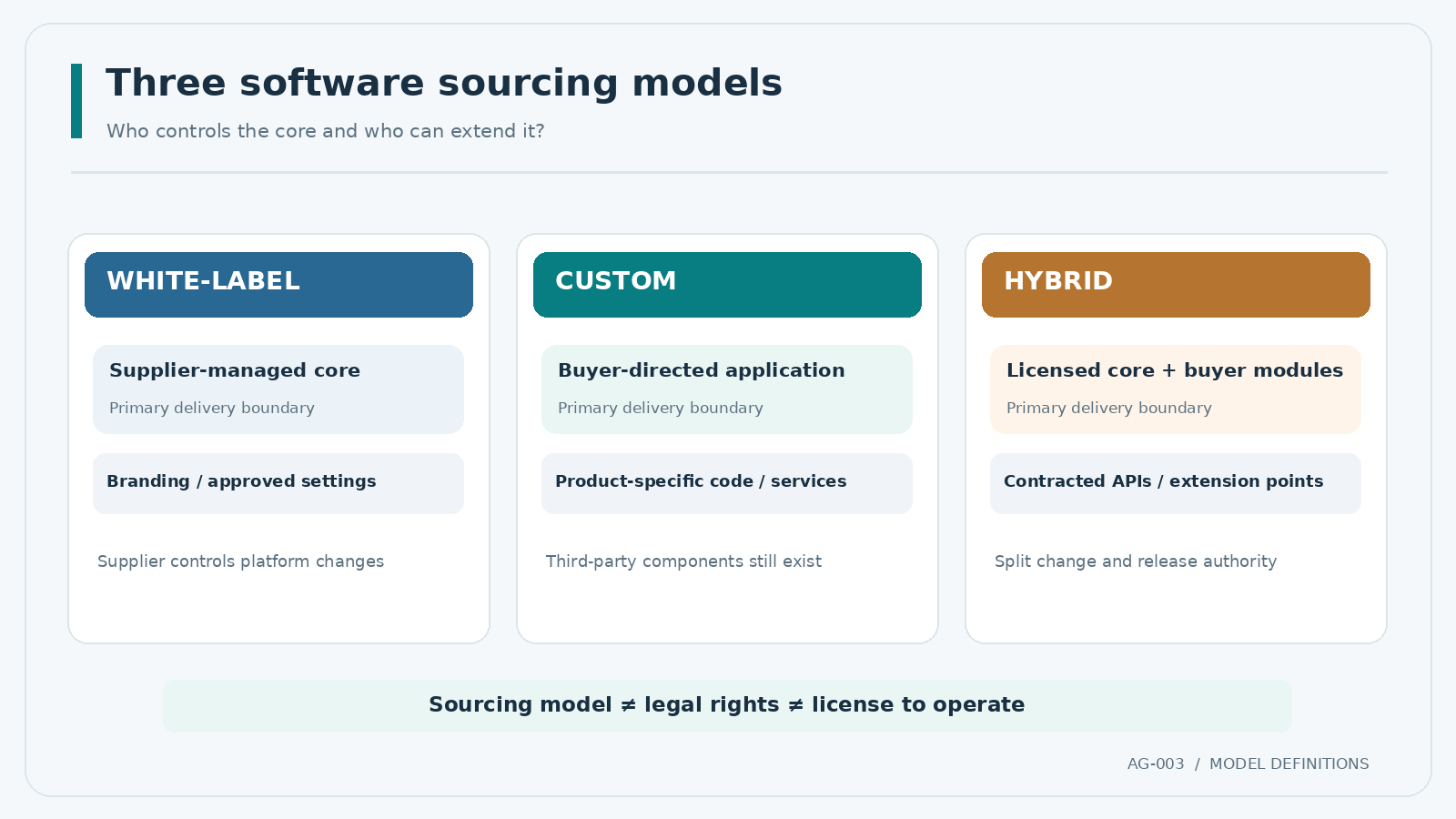
Define White-Label, Custom and Hybrid Sourcing
A white-label gambling app generally uses a supplier-controlled platform that multiple clients can license, configure or brand. The supplier may operate parts of the backend, manage integrations or supply release packages. The exact division is contractual; a branded interface alone says little about who owns the account system or carries a regulatory obligation.
A custom gambling app involves development against a buyer-specific specification. It may still use licensed game content, identity verification, payments, geolocation and hosting services. “Custom” is not a promise that every component is original or that all underlying intellectual property transfers to the buyer.
A hybrid model combines a licensed platform with buyer-controlled modules or interfaces. It may offer a practical boundary between standard operations and product differentiation, provided the interfaces and exit rights are documented.
| Question | White-label arrangement | Custom arrangement | Hybrid arrangement |
|---|---|---|---|
| Core platform | Often supplier-controlled | Buyer-specified; ownership varies by contract | Typically licensed core with selected buyer modules |
| Brand and UI changes | Usually within approved configuration or extension points | Defined through project scope and engineering capacity | Configurable shell plus specified extensions |
| Release authority | May depend on supplier release cycle | May be buyer-led, subject to service dependencies | Shared; depends on integration contract |
| Third-party integrations | Supplier catalog or approved APIs may constrain changes | More choice, with more integration work | Negotiated per interface |
| Exit complexity | Often tied to export and replacement rights | Tied to code, infrastructure and service dependencies | Split across owned and licensed components |
Treat these as common patterns, not provider guarantees. A purchase agreement that grants substantial code access may change a white-label result; a custom contract without source-code assignment may leave the buyer with less control than expected.
Code and Data Ownership: Separate the Rights
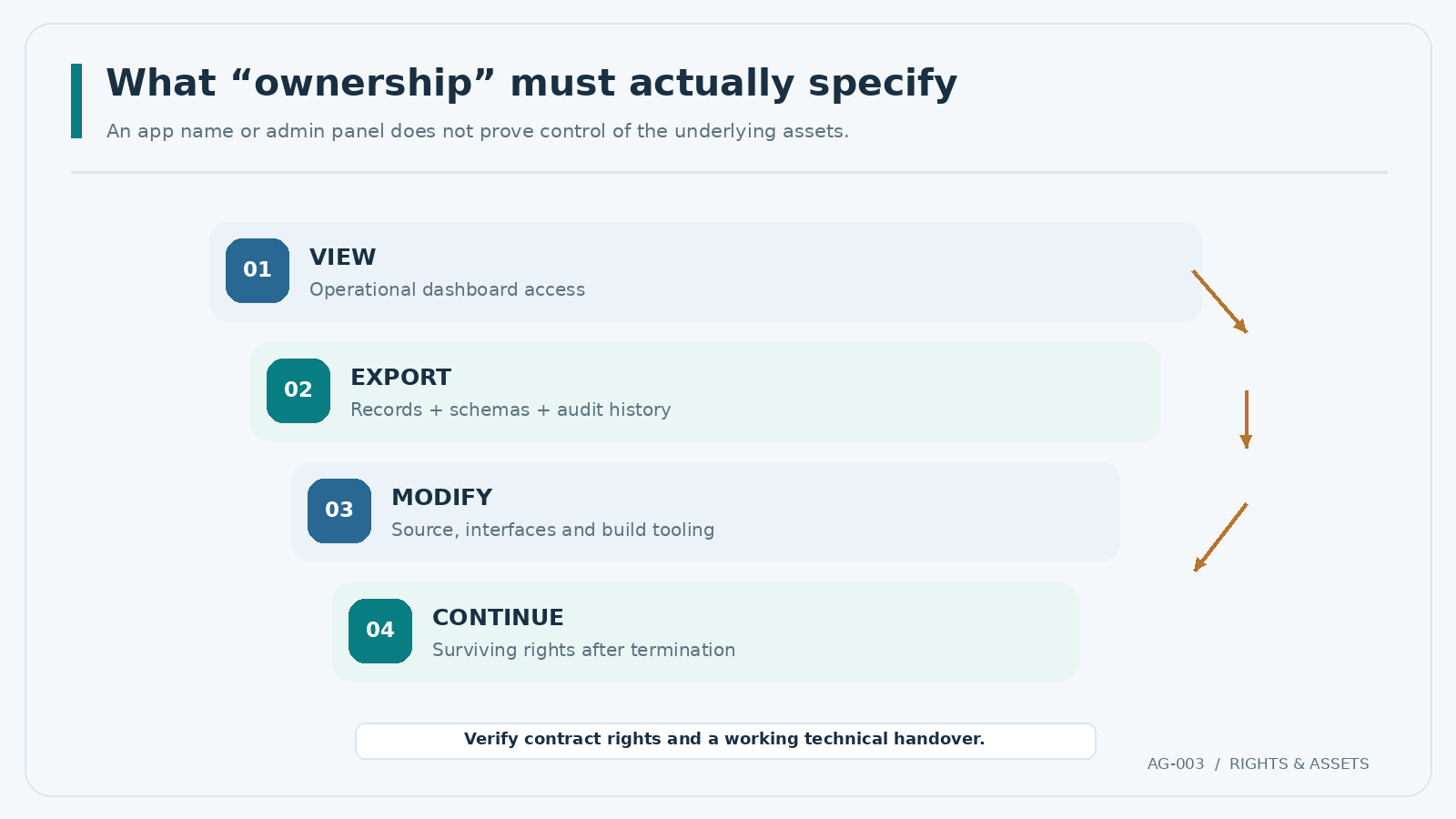
Product teams often ask, “Will we own the app?” That question is too broad to produce a reliable answer. Divide it into assets: brand materials, mobile source code, backend code, configuration, customer records, event history, operational documentation and credentials.
For software IP, record whether each component is assigned, licensed or excluded. Confirm rights to modify, maintain, reproduce and appoint a replacement developer. Check whether the source repository includes build scripts, deployment configuration, tests and dependencies needed to compile a usable product. A source archive without an executable build process is not practical independence.
For data, distinguish legal roles and access from technical export. Ask who decides processing purposes, who is a processor, who hosts the records, which data fields can be exported, and whether the format can be imported elsewhere. Do not assume a contractual “ownership of data” clause resolves privacy obligations.
Where UK GDPR controller–processor rules apply, the UK Information Commissioner’s Office explains that contracts must address processor assistance, audits and end-of-contract return or deletion of personal data, subject to legal retention requirements. These are legal obligations in applicable circumstances, not a general right to obtain every proprietary database or service implementation. See the ICO contract guidance.
Use an asset register with these fields before procurement approval:
- Asset and system: precise repository, API, database, documentation set or trademark.
- Rights holder: entity with ownership or license rights; identify exceptions.
- Operator access: read, write, audit, export and deployment permissions.
- Handover method: export format, delivery timeline and test environment.
- Surviving rights: what remains usable after termination or insolvency.
Integration and Customization Limits
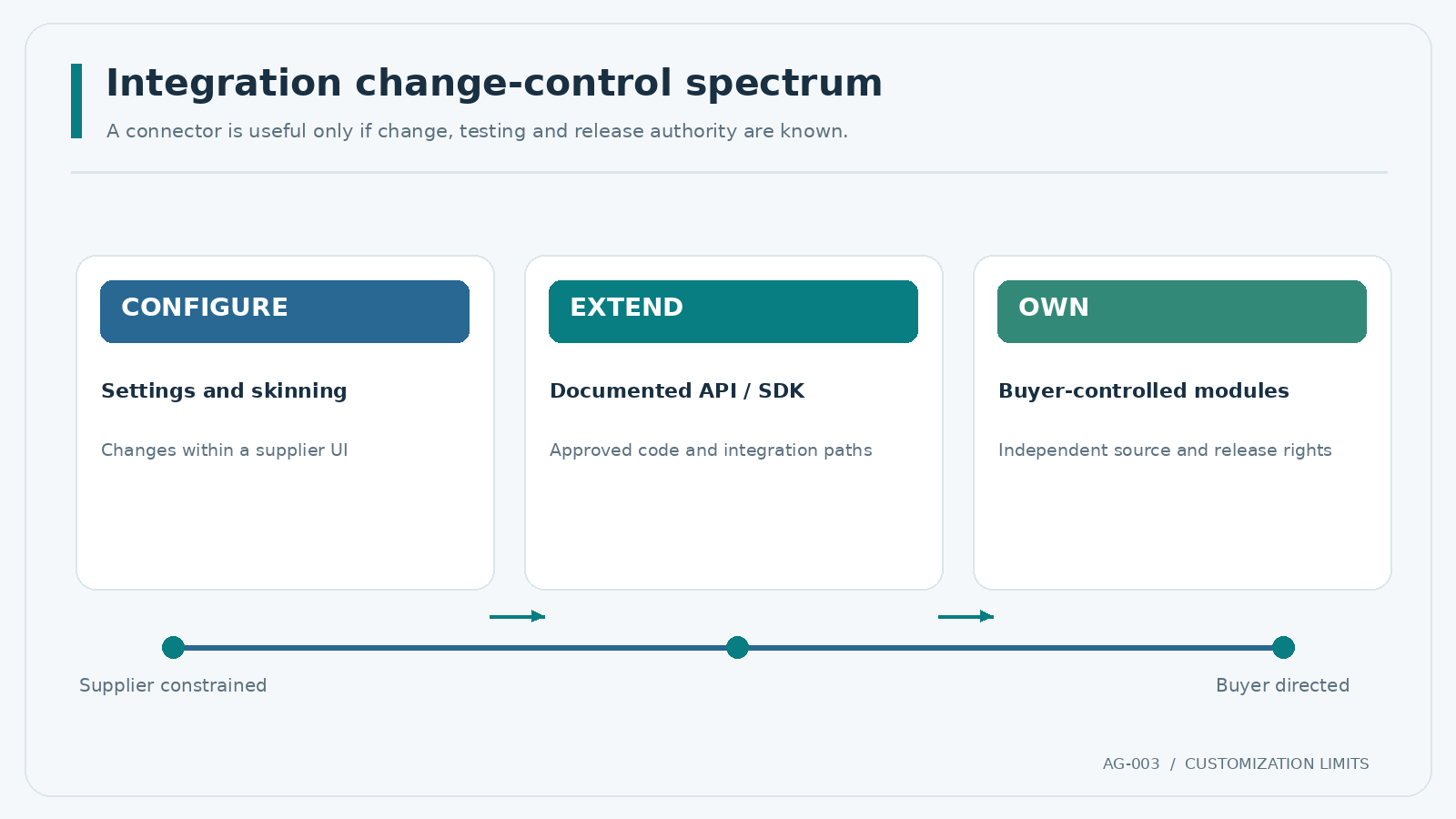
The important test is not how many integrations a vendor advertises. It is who may change an interface when a product requirement changes. A gambling product may rely on identity checks, eligibility decisions, payment records, customer support tooling and reporting. Each connection carries both a technical dependency and a change-approval route.
During a demonstration, test a change request rather than only the happy path: add a new data field, change a failure message, replace an approved external service or expose a new audit event. Record which requests can be configured, which need a paid supplier change and which are prohibited by platform architecture.
| Control surface | Evidence to request | Warning sign |
|---|---|---|
| Integration interfaces | Versioned API specification, webhooks and sandbox | Integrations exist only as vendor-managed tickets |
| UI and workflow | Allowed extension points and component documentation | “Fully customizable” without stated limits |
| Event and audit data | Field catalog, export sample and retention design | Reports cannot be reconciled to source events |
| Release management | Change window, rollback ownership and compatibility policy | Buyer cannot evaluate supplier changes before release |
| Testability | Staging environment and deterministic failure cases | No way to reproduce integration or control failures |
Custom software can offer stronger control of buyer-specific APIs but does not eliminate supplier dependencies. A hybrid model can be sensible when an organization’s differentiating interface needs independent release authority while a licensed service remains responsible for well-defined back-office functions.
Security and Regulatory Responsibility Remain Separate
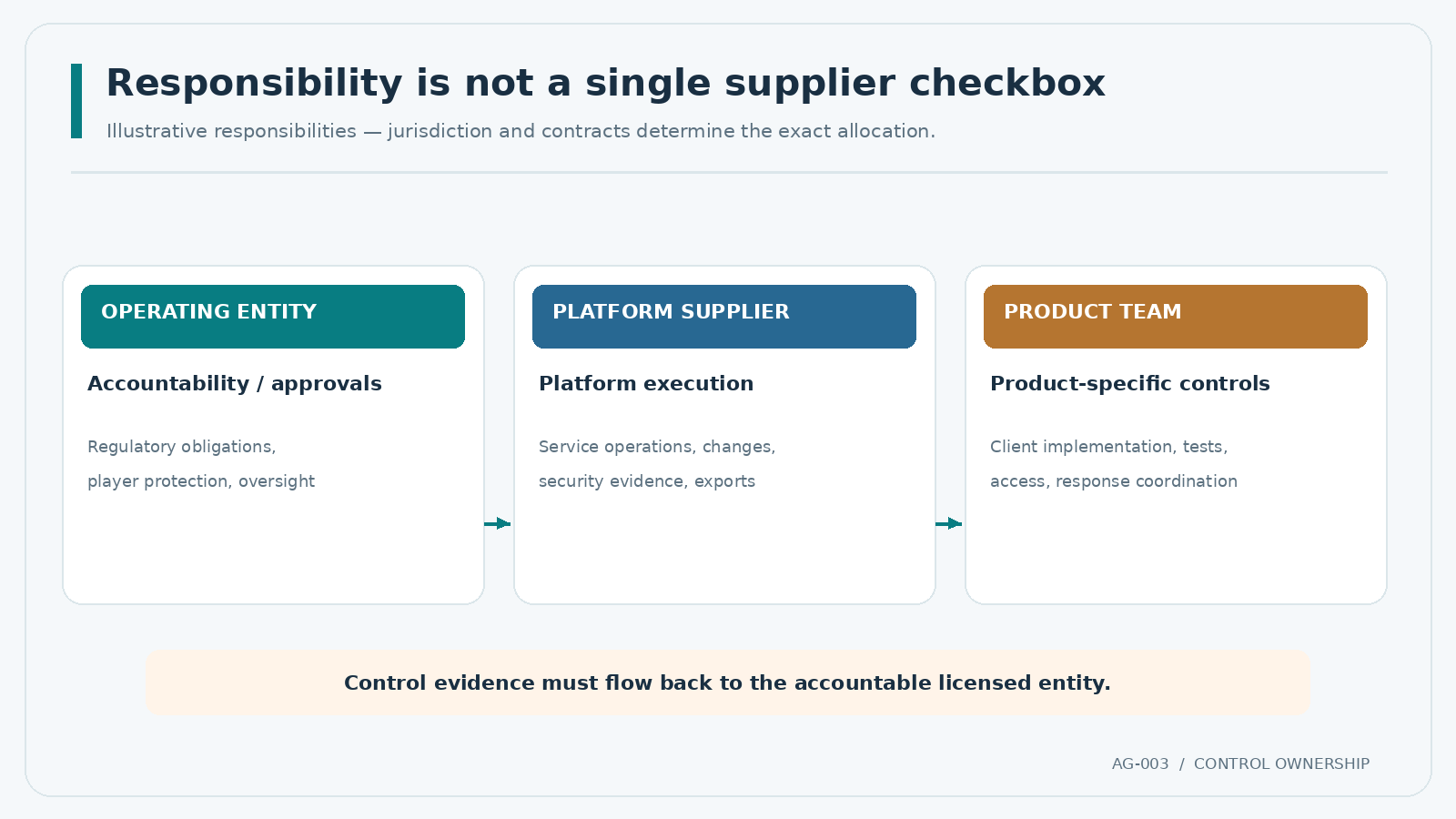
A license to use gambling software is not the same thing as a gambling operating license. Operating eligibility depends on jurisdiction, product type and the entities involved. A supplier’s approvals or certifications do not automatically authorize every customer to offer real-money gambling.
For a concrete example, the UK Gambling Commission’s third-party guidance states that responsibility for white-label gambling operations remains with the operating license holder. Its Remote Gambling and Software Technical Standards apply to relevant licensees and must be checked against the actual product and market. This UK example should not be copied as a universal rule for other countries.
Both sourcing models also face app-distribution conditions. Apple’s App Review Guidelines, section 5.3, require relevant licensing and geographical restrictions for real-money gambling apps. Google Play’s gambling policy imposes its own eligibility and approval requirements. The app-submission checklist (AG-005) addresses that separate approval process.
Operational responsibility should be explicit even when technical controls are outsourced. Define who authorizes changes, investigates incidents, maintains secure configurations, reviews access and delivers evidence to the licensed operator. NIST SP 800-161 Rev. 1 provides a general framework for supply-chain risk management; OWASP MASVS provides mobile-app security verification controls. Neither document replaces gambling licensing requirements.
Vendor Exit and Migration: Test the Contract Before Signing
The most expensive dependency may not appear until termination. A promised “full export” is insufficient if the output omits account status, audit history, data definitions or the relationships required to reconstruct records.
A credible exit plan names the transition trigger, notice period, assistance services, permitted data uses, export schema, credential transfer method, parallel-run conditions and deletion or retention rules. Some records must be retained for legal reasons; a plan must distinguish obligations from transferable records and avoid promising deletion that cannot lawfully occur.
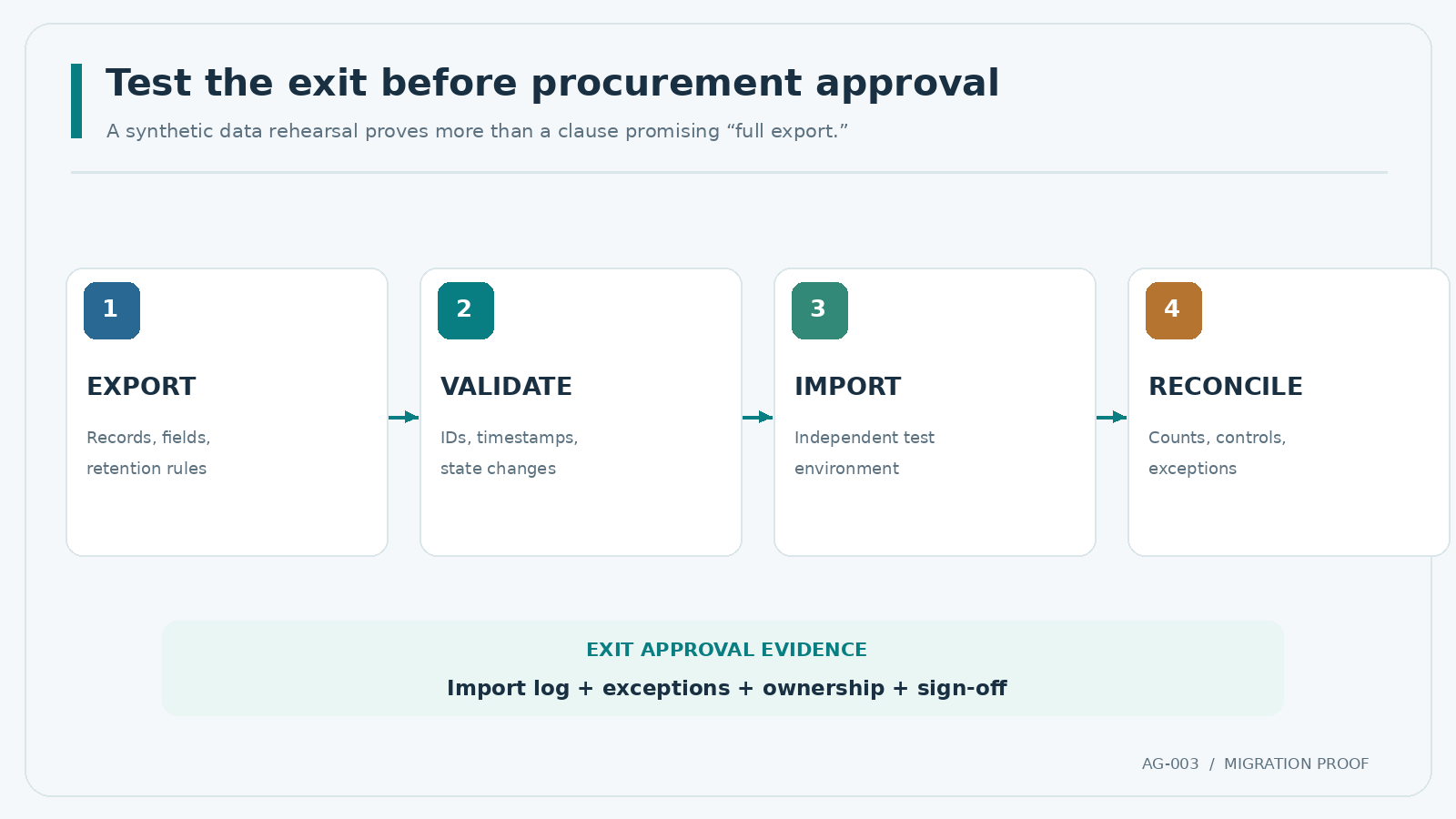
Run a tabletop migration exercise using a synthetic dataset before selecting a model:
- Identify which services stop at contract termination and which have separate continuing agreements.
- Request a sample export and inspect identifiers, timestamps, statuses and provenance.
- Import the sample into an independent test system and reconcile counts and critical state transitions.
- Identify credentials, signing assets, DNS, monitoring, support history and runbooks requiring controlled handover.
- Record how customer protections, account restrictions and unresolved support cases remain effective during cutover.
- Approve an evidence-backed exit plan, including gaps and contract amendments, before commercial commitment.
This is a planning rehearsal, not an instruction to transfer live player data without authority. Production migration requires market-specific legal, privacy, security and operations review.
Build-or-Buy Decision Matrix
Use two stages: non-negotiable gates first, weighted preferences second. A high total score cannot make an option acceptable when the operator lacks a required license, cannot meet mandatory player-protection requirements or cannot lawfully obtain necessary data.
Mandatory gates: verify permitted operating model by market; confirm legally sufficient licensing arrangements; document privacy roles and necessary rights; establish feasible security and audit evidence; and identify a workable way to maintain required controls through exit. Mark a gate as pass, unresolved or fail, with a named evidence owner.
For options that pass every gate, weight the criteria below. Assign 1 (poor evidence/fit) to 5 (strong evidence/fit) based on the same business scenario. The suggested weights are an illustrative starting point, not an industry benchmark.
| Decision criterion | Example weight | Evidence used for the score |
|---|---|---|
| Code and IP control | 20% | Rights schedule, source access and survivable licenses |
| Product differentiation | 15% | Demonstrated workflow and UI extension rights |
| Integration control | 15% | Tested APIs, documentation and change ownership |
| Security and auditability | 15% | Control ownership, independent testing and evidence access |
| Exit and portability | 20% | Tested export, transition assistance and reuse rights |
| Time-to-operational-readiness | 15% | Credible critical path with dependencies and approvals |
Calculate weighted score = Σ(weight × score) ÷ 100, where weights sum to 100 and each option receives a 1–5 rating. A score is a structured record of assumptions, not a proof that one model is generally superior. In the downloadable workbook, changing scores or weights updates the comparison; unresolved gates block a recommendation regardless of the score. Download the editable build-or-buy workbook, CSV decision matrix, mandatory-gates template and asset-and-exit register.
As an example, a short-lived branded pilot might assign more importance to deployment certainty if licensing, export and account controls are already evidenced. A differentiated long-term product with frequent API changes may assign more importance to code rights, extensions and migration. The same supplier could score differently in those two scenarios.
Write the decision in one sentence: “We prefer [model] for [product/market], provided [critical evidence] is received by [decision date]; our fallback is [option].” That sentence is more useful than a score with no conditions.
Frequently Asked Questions
Is a white-label gambling app always cheaper or faster?
No. It may reuse more existing functionality, but timing and total ownership cost depend on required integrations, licensing, contractual change rights, vendor queues and support arrangements. Model cost separately rather than inferring prices from sourcing labels.
Does custom development guarantee ownership of the source code?
No. Check the contract’s assignment and licensing provisions, pre-existing components, subcontractor rights and third-party dependencies. Ensure any promised handover includes a reproducible build and usable documentation.
Can an operator switch from white-label to custom later?
Potentially, but only if the rights, export quality, continuity arrangements and regulatory approvals support the transition. Validate migration on synthetic data and confirm the treatment of restricted or retained records before relying on that path.
Who is responsible for compliance when a platform is outsourced?
It depends on the jurisdiction, licensed entities and service contracts. In Great Britain, UKGC guidance is clear that white-label arrangements do not transfer the operating license holder’s responsibility. Obtain market-specific legal advice for the actual structure.
What should a buyer do next?
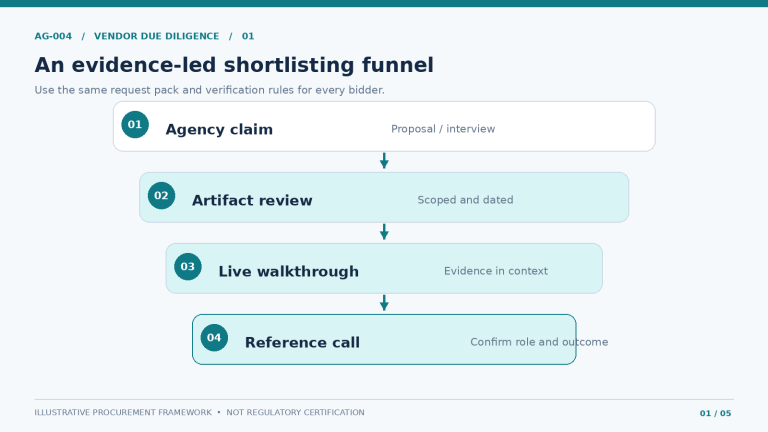
Complete the downloadable build-or-buy matrix with evidence links and gate owners. Use the development budget worksheet (AG-002) for financial scenarios, and the agency due-diligence checklist (AG-004) when selecting the implementing organization.
Editorial note: This article is a sourcing framework, not legal advice or a market-rate survey. Confirm licensing, IP clauses, privacy responsibilities and platform policy for each target jurisdiction before publication or procurement approval. All example weights and scores are hypothetical.